

In 2018, Cian Sawyer opened Holon Learning in Nassau, Bahamas, with five learners and a plan to build a school around each child rather than the other way around. Since then, Holon has grown into a school Cian describes as the first and only democratic micro school in the Bahamas, offering individually curated, learner-centered education. Along the way, it earned official recognition from the Bahamian government, and in 2023, it joined Clonlara’s global learning community as an Affiliate School.
We sat down with Cian, Holon’s founder and principal, to talk about what daily life at Holon looks like, how becoming a Clonlara Affiliate has shaped her approach, and an unforgettable reunion on a recent trip to Portugal.
Holon spent years working to become an officially recognized school in a system that had never seen a model quite like it. Has your family, classroom, or community ever had to push for something unconventional to be taken seriously? Tell us about it in the comments below. We’d love to hear it.
A Long Road to Recognition
Getting Holon officially recognized by the Bahamian government wasn’t a single application. It took years of navigating multiple agencies, each with its own approvals to grant before the Ministry of Education would even consider the file complete. Cian’s greatest challenge wasn’t the paperwork volume, though there was plenty of that. It was translating a personalized, non-traditional model into terms a conventional system could recognize.
“It was really the greatest difficulty I had, aside from getting a space: explaining to them how Holon works, because it doesn’t match anything that they know,” Cian said. She invited officials to spend a day at the school and see it in action. They never took her up on it, but she kept meeting with the council anyway, going back and forth for years.
The approval finally came through on an ordinary night, in an email she almost didn’t open. “It said, ‘Dear Principal Sawyer, this is to tell you that you’re approved and you’re registered.’ I was just shocked and over the moon at the same time. I ran upstairs and told my husband, you’re never going to believe what I just got.”
A Framework for Personalized Learning
Cian says Clonlara’s philosophy, personalized and interest-based, built on student agency and freedom, already felt familiar when Holon became an Affiliate in 2023. What changed was the mechanics of putting it into daily practice, thanks to a tool Clonlara students and educators use to help ground that philosophy in the day-to-day: Full Circle Learning (FCL). FCL guides students to turn a topic or interest into a real learning plan, forming questions, setting goals, documenting their progress, and reflecting on what they’ve learned. For Cian, it started out as paperwork she needed to complete. Over time, it became something closer to scaffolding for how she thinks about facilitating learning altogether.
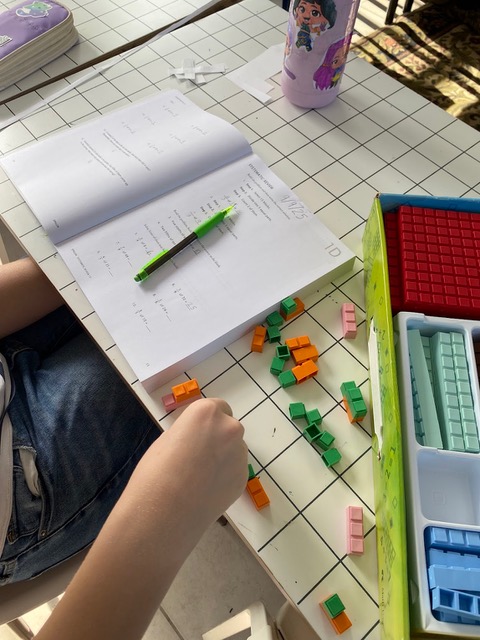
That shows up in the small, individual decisions Cian makes every day. One learner working several grade levels ahead in math got to keep exploring advanced material while still meeting foundational requirements. Another student, drawn to a different kind of science experience than her group’s weekly field trips, worked with Cian to chart her own path: independent coursework that still met the full requirement, with the freedom to rejoin the group whenever a trip called to her.
“Over time, FCL has become the guidelines and the steps that I’m taking along the way,” Cian said. “It also influences how I support the kids. Even the kinds of questions I might ask them are influenced by FCL terminology.”
A School Built Around Every Learner
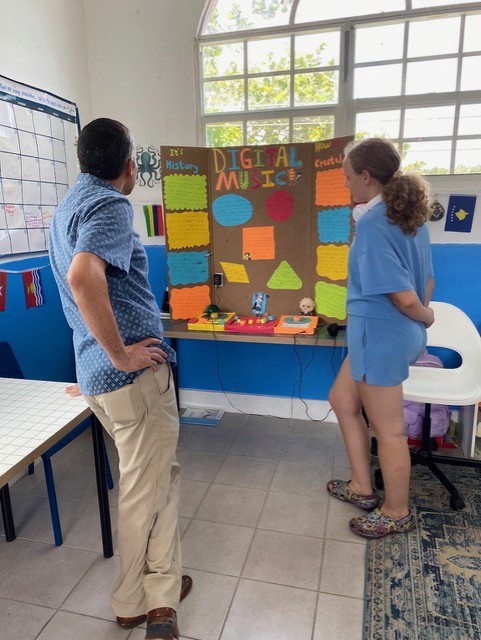
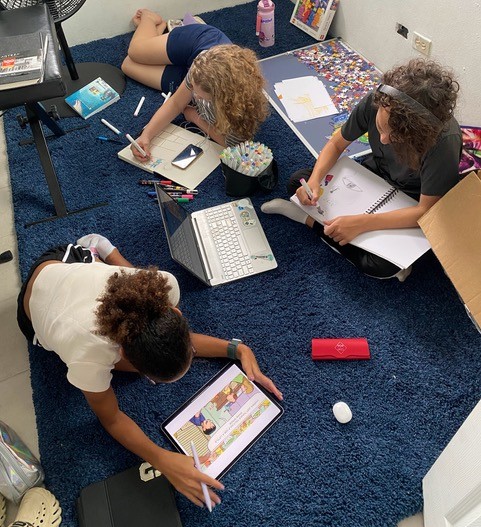
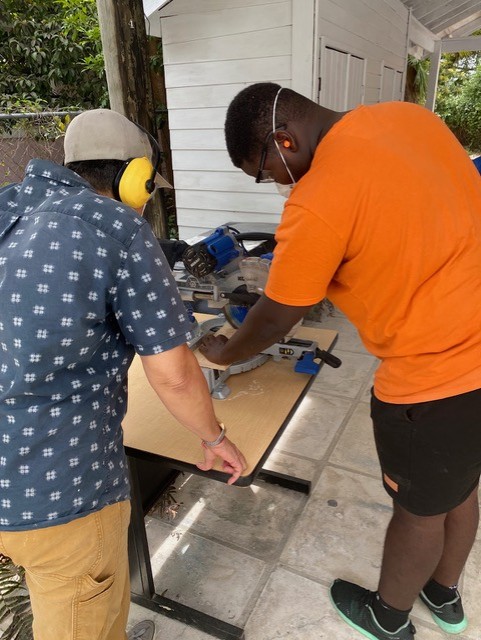
As Holon’s founder and principal, Cian wears every hat a small school needs. She plans each group class, guides every student’s individual learning, and handles the records and administration that keep the school running, and because a school this size doesn’t have a separate guidance office, she’s also often the first person a student turns to when something’s hard. That closeness is part of what makes Holon what it is. This year’s group spanned ages 11 to 18 with a wide range of learning needs and neurological profiles, which meant building a genuine multi-age community rather than a set of parallel classrooms.
Cian describes the payoff as students growing into real ownership of their education. Some years, her role shifts from active teaching to more of a mentor and sounding board, as students take the wheel on their own progress. One of her seniors this year completed two full years of math curriculum in a single year, simply because she wanted to keep going.
Cian also credits an idea borrowed from the unschooling world: “strewing,” or deliberately leaving interesting books, questions, and materials in a learner’s path without requiring anything of them. “They are invitations to play and learn,” she said. “The stakes are so much lower when it’s play, but they can still engage and grow. There are a lot of opportunities there.”
What does personalized learning look like in your world, at home, at school, or somewhere unexpected? We want to hear your story.
A Reunion Half a World Away
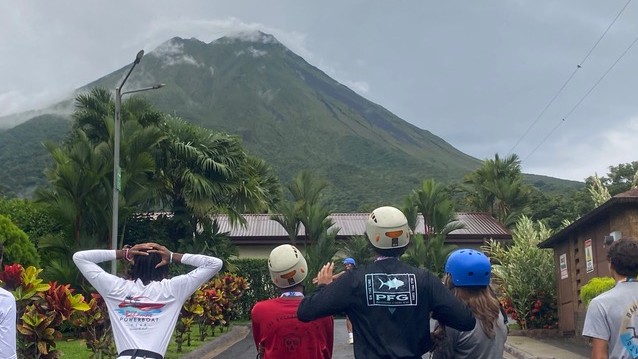
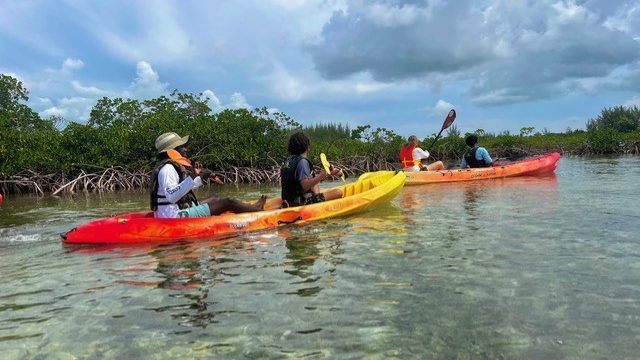
Every year, Holon takes its learners on a trip abroad, and this year’s destination was Portugal, including a visit to Colégio de São José (CSJ), another Clonlara Affiliate, in Coimbra. Cian had never seen a fellow Affiliate school in action, and neither had her students.
What she didn’t expect was to recognize a young man in the room as a former student, one she had taught years earlier, back when he was a toddler in the Bahamas, long before she’d started Holon. Neither of them placed it right away. A small detail, something a colleague noticed in his face, tugged at a memory Cian hadn’t touched in years. Once it surfaced, the rest came flooding back: a favorite stuffed animal he used to carry everywhere, a habit of speech, small everyday moments from a classroom half a lifetime ago. He was stunned that any of it had stayed with her.
The moment changed the tone of the whole room. Where Holon’s and CSJ’s students had been politely, academically engaged with each other, the shared emotion of that reunion gave everyone else permission to connect too. Younger and older students who’d been sitting in careful, polite silence moments before were suddenly leaning across the room, trading questions, laughing with each other, and comparing favorite subjects: the kind of easy, curious connection no lesson plan can manufacture on its own.
“That moment just completely shifted the tone of the room,” Cian said. “Kids have to feel safe, feel seen, have an emotional connection. Suddenly that gave the room a proxy relationship with each other.”
Looking Ahead, Together
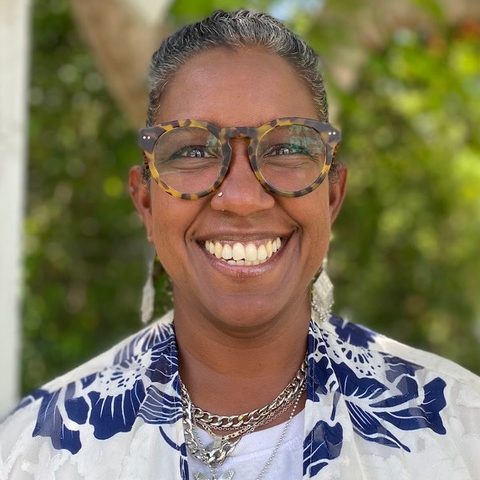
Affiliation has given Holon something more than a shared framework. It’s connected Cian to a global network of educators built specifically for schools doing something different, elevating work she was already doing well and giving it a wider community to grow into. Looking forward, she’s hoping for more of exactly what the Portugal trip sparked: deeper connection across Clonlara’s global learning community, whether through virtual collaborations between student groups, shared events or someday, an exchange program that brings learners from different countries together in person.
“I think of everybody as an individual, and we are part of a community, the global community,” Cian said. “Having ways to connect with other humans across cultures is so important now.”
Are you part of a small school or alternative-education community with a story like this one? We’d love to hear how you’re building connection where you are. Drop it in the comments.