


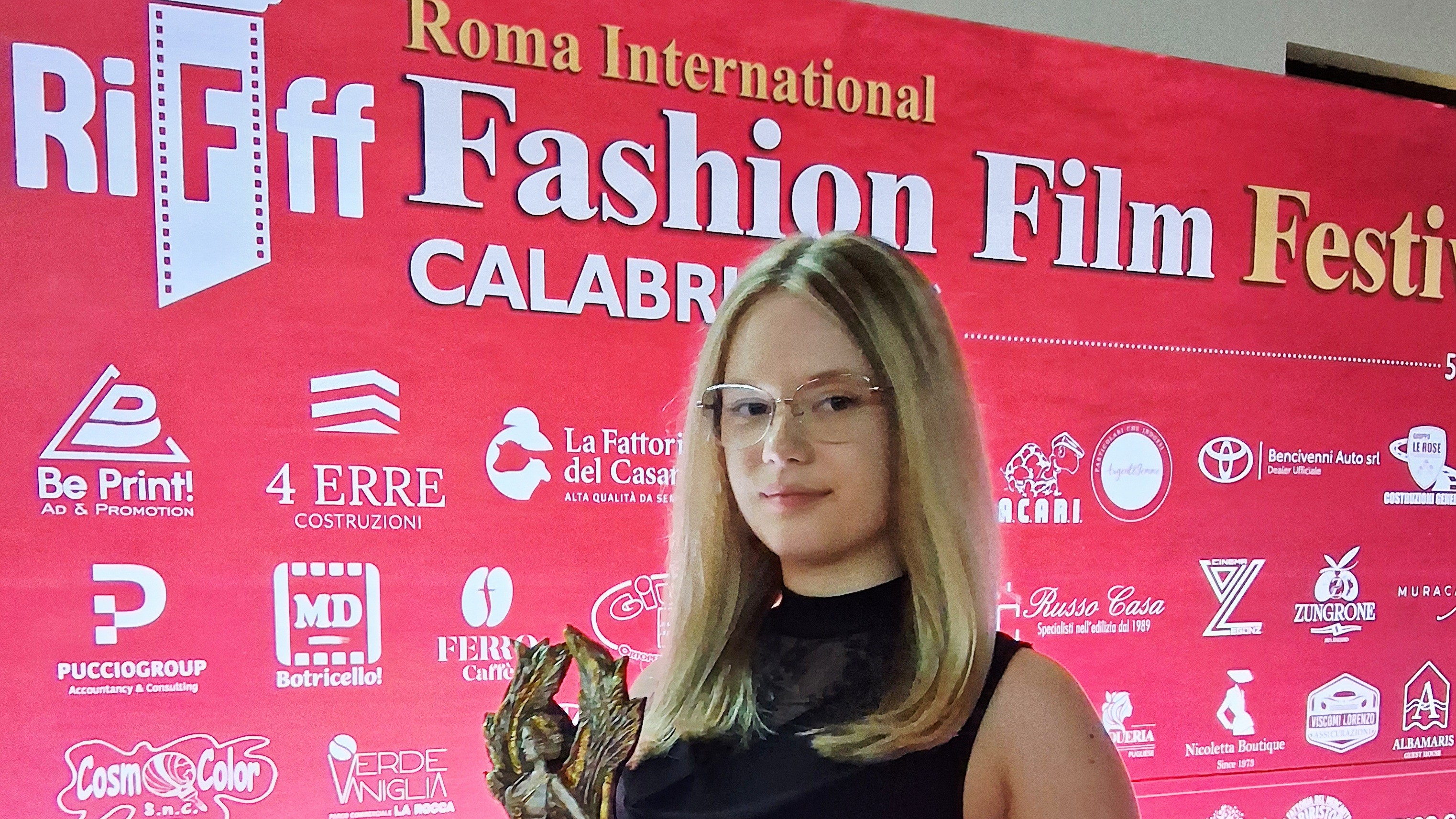
What happens when a young person’s passions are given real room to grow? At Clonlara School, we believe education should adapt to each learner, making space for their curiosity, creativity, and dreams. Éva Kádár, Clonlara’s Hungarian program coordinator, introduces Laura Vitéz, a student whose story shows what that freedom can make possible, and reflects on why every child’s growth deserves the same space.
What If School Made Room for Our Dreams Instead of Getting in Their Way?
“Don’t ask yourself what the world needs. Ask yourself what makes you come alive, and go do that. Because what the world needs is people who have come alive.” — Howard Thurman
What if education didn’t start from the assumption that every child should learn the same things, at the same age, and at the same pace?
What if, instead of focusing on what a child isn’t good at, we paid more attention to what sparks their curiosity, captures their imagination, and makes their eyes light up? What if, rather than expecting the same level of achievement in every subject, we helped children discover what truly interests them and gave them the opportunity to explore it deeply? And what might happen if they actually had the time to do so?
We are delighted and proud to introduce Laura Vitéz, a 17-year-old student in Clonlara’s Hungarian Program, whose story offers a compelling glimpse of what this kind of education can make possible.
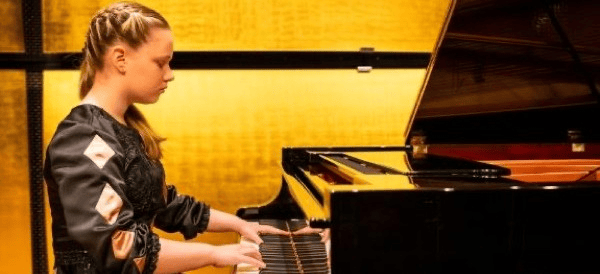
Laura is a composer, pianist, fashion designer, and filmmaker. She began playing the piano at the age of three and composing at seven. Since then, she has earned numerous international accolades. She has performed at Salzburg’s Mozarteum and Vienna’s Musikverein, released two albums, and appeared in a BBC documentary about Mozart.
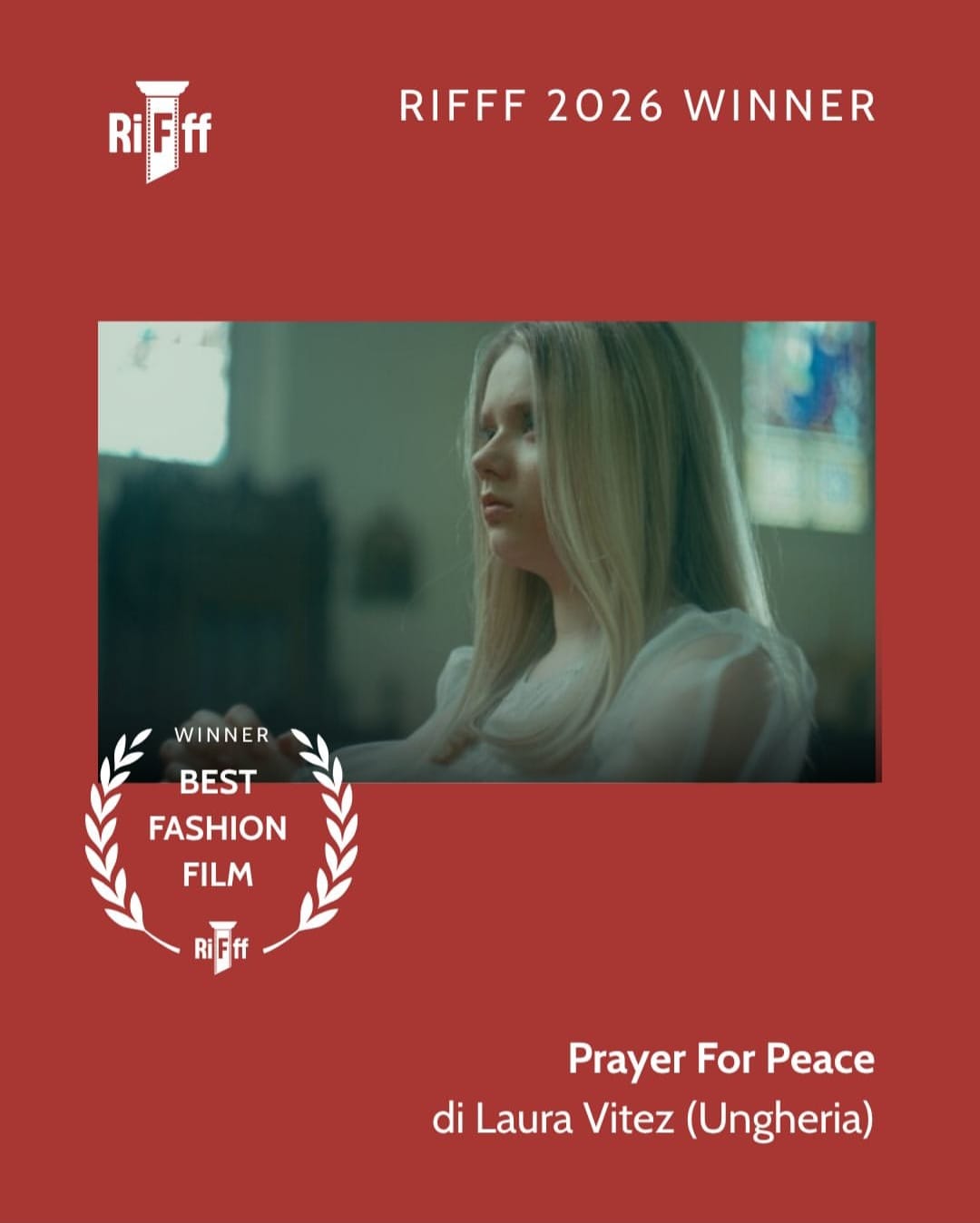
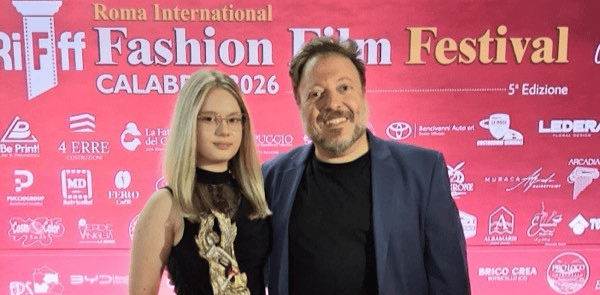
Her latest project, the musical short film Prayer for Peace, won Best Fashion Film at the 2026 Roma International Fashion Film Festival. In Hungary, her achievements have also been recognized with the Young Talent of the Year Award and the Golden Star distinction.
What makes the film particularly remarkable is that Laura not only composed its music but also directed it, appeared in it, and designed its costumes.
For Laura, music and fashion design are two distinct, equally important passions. She has found her own voice and means of expression in both. While each stands as an independent creative pursuit, they sometimes come together in fascinating ways, as they do in Prayer for Peace, where music, fashion, and filmmaking serve a shared artistic vision.
For Laura, creating art is not simply a form of self-expression. It is also a way to connect with others and make a difference in the world around her. Through her international initiative, The Code of Harmony, she hopes to promote peace and human connection through music. She also organized a sold-out charity concert in Bratislava to support orphaned children in Transcarpathia.
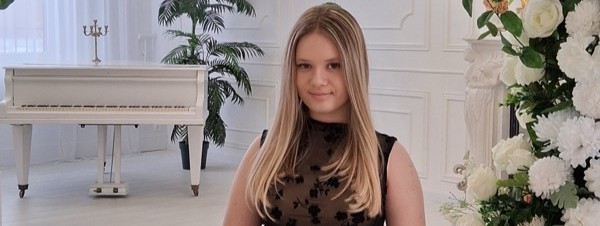
But how does a 17-year-old find time for all of this? And where does school fit into the picture?
We asked Laura about her everyday life, what freedom in learning means to her, and how she balances her education with her creative work.
“For me, freedom in learning means not having to follow a rigid schedule from eight in the morning until the afternoon, but being able to adapt my studies to my own pace and creative work.”
Alongside her studies at Clonlara, Laura is taking an art course at Sorbonne Art Academy. She spends much of her time composing music, designing clothes, working in the studio, and preparing for her various projects. Her mother, who is also her manager, helps organize performances and travel. Despite her busy schedule, Laura makes time for her well-being, practicing Pilates five times a week and unwinding with a book in the evenings.
“What helps me most about Clonlara is that the system gives me complete flexibility and treats me as a genuine partner in my own projects.”
What if school weren’t a predetermined structure that children had to fit into, but a learning environment flexible enough to adapt to them?
At Clonlara, personalized learning allows students to progress at their own pace and shape their education around their interests and goals. Their own research, projects, and real-world experiences can become meaningful parts of their learning.
Laura, for example, openly admits that mathematics, physics, and chemistry are far from her favorite subjects. Yet she has found ways to connect them to her own creative world.
“In physics, for example, I studied the physics of sound, while in mathematics I explored the geometry of fashion design — including the golden ratio, fractals, and how optical illusions and geometric patterns can transform the appearance of the human body on the runway.”
The point of this approach isn’t that children should never have to study subjects they find less interesting. It’s that learning should have personal meaning. Knowledge doesn’t have to exist in isolated subjects; it can connect to the questions children themselves ask about the world.
And what if we assessed learning not only by what children can recall, but also by what they create, understand, experience, and solve?
What leads someone to start a school of her own? Pat tells that story in her book, The School That’s Inside Through her own projects, Laura has developed skills that can only truly be learned through real situations, decisions, and responsibility.
“My own projects — such as recording an album, designing clothing collections, or producing a musical short film — have given me practical knowledge that would be very difficult to acquire from textbooks.”
“I’ve learned how to bring together and lead an entire crew or team, and how to make quick, confident decisions under tight deadlines.”
Making a film, for example, calls for creativity, planning, collaboration, communication, problem-solving, and perseverance, all at once. These abilities don’t necessarily fit neatly into individual school subjects, yet they are essential in so many areas of life.
For Laura, learning and creating are not two separate worlds.
“School and my artistic work don’t get in each other’s way. Quite the opposite — they inspire each other.”
When we asked what advice she would give to young people who have something they truly love but feel they don’t have enough time for it alongside school, she replied:
“I would tell them not to give up on their dreams because of restrictions, but to look for a solution that gives their passion room to grow.”
She added:
“The most important thing is to believe in yourself and your own talent, because when you pursue your dreams wholeheartedly, you will always find a way and the time to make them happen.”
It is especially rewarding for us to know that Clonlara’s personalized learning program has helped Laura pursue her creative vision with such freedom and dedication.
But Laura’s story is about more than exceptional talent and achievement. It also reminds us of the extraordinary value of the curiosity and creativity with which children approach the world.
We can imagine Laura spending hours experimenting with a melody, exploring different materials, shapes, and textures, reflecting on events in the world, and searching for ways to express the feelings they stir in her. Through this process of exploration, combined with her exceptional talent, hard work, and perseverance, she creates works of art that have the power to reach and move others.
Yet the desire to explore, experiment, and express ourselves is part of every child’s life.
Some children spend hours observing nature, building bird feeders, or organizing teams in video games. Others form friendships, invent stories, or cook alongside their families. And some teenagers retreat behind their bedroom doors for months, searching for their place in the world and trying to understand who they really are. From the outside, it may seem as though nothing much is happening. Yet they may be doing some of the most important work of their lives: discovering and shaping who they are.
None of this is the same as an internationally acclaimed artistic achievement. But it doesn’t have to be to matter.
And perhaps one of the greatest gifts of parenthood is the privilege of witnessing this unfolding.
Watching our children discover the world through fresh eyes, less burdened by assumptions than our own. Seeing them notice things we adults have long stopped paying attention to. Watching them question, doubt, experiment, and sometimes uncover connections that take us completely by surprise. Seeing them lose themselves in something they genuinely love.
How wonderful it would be if they could hold on to as much of this as possible.
If we could protect them from the unnecessary damage to their confidence that comes from constantly being compared with others. If they could grow up knowing that they don’t have to excel at everything, that not every attempt has to produce a result, and that they don’t have to become someone else to be worthy.
What if education did more than impart knowledge? What if it also helped preserve this curiosity, courage, and inner freedom? What if we paid attention not only to who a child might become one day, but also to who they are right now?
Laura’s story shows us how far talent, passion, perseverance, and the right support can take someone. At Clonlara, we believe in an education that gives exceptional talent the space to flourish while recognizing the equal importance of quieter, less visible forms of growth. An education that takes each child’s interests and individuality as its starting point, using them as a compass to inspire and support a truly personalized learning journey.
Perhaps one of the most important things we can do as parents and educators is to resist the urge to write our children’s stories for them — and instead give them the safety, freedom, and trust they need to write their own.
You can read more about Laura’s work and recent achievements here: