The student experience
Each day starts with a circle for students and teachers to check in, share updates, and review the schedule. After, students head to class or participate in school-wide activities, with schedules created based on student input.
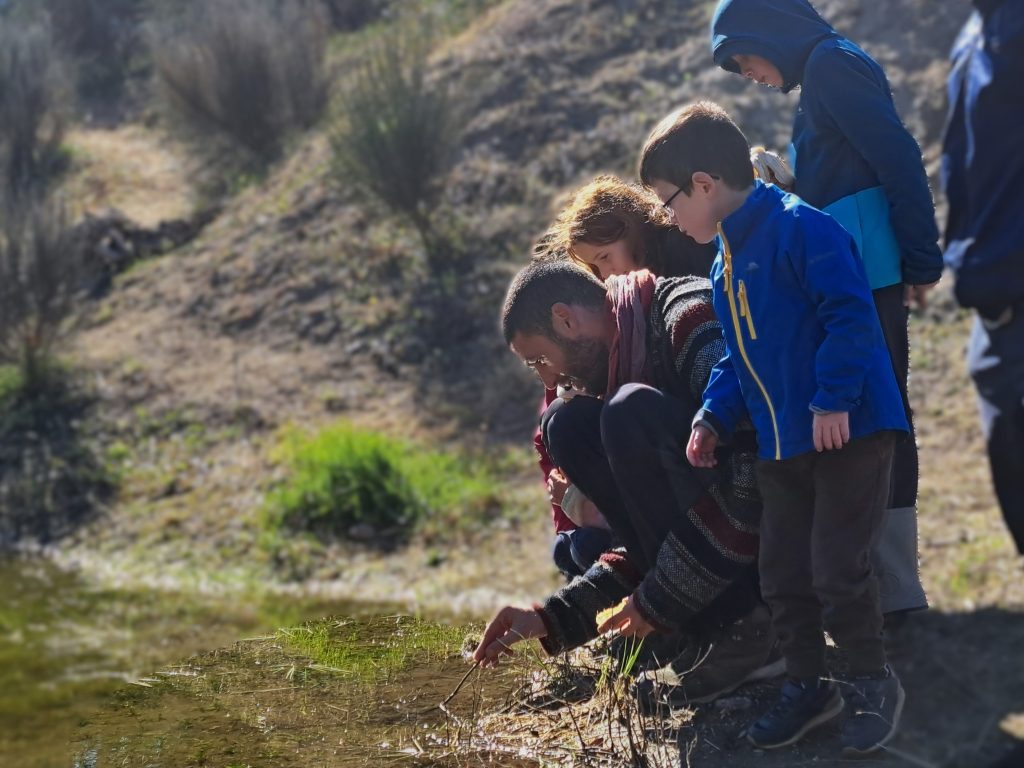
Students work on core subjects and electives, with mini-lessons, group or individual Full Circle Learning (FCL) projects, focusing on topics they choose. There’s also time for outdoor activities, field trips, and community engagement.
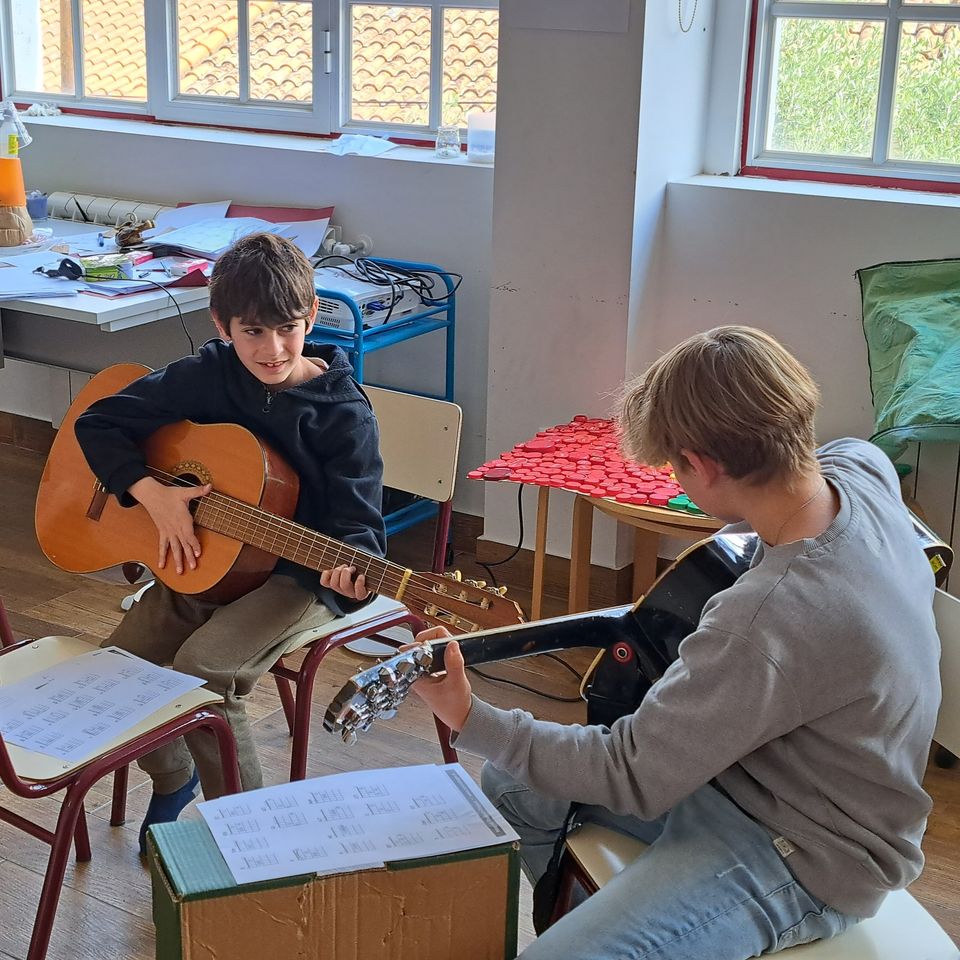
Students work in small groups or independently on tasks like music, experiments, reading, or creative projects. Classrooms are flexible, open spaces filled with light and materials that cater to students’ needs.
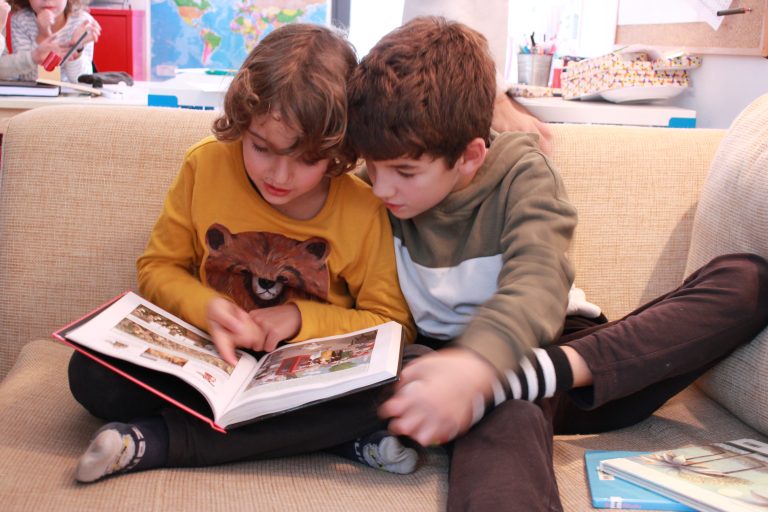
After lunch, everyone pitches in to clean up, and then it’s D.E.A.R. time (Drop Everything and Read) for 15-30 minutes. The afternoon includes more FCL sessions or spontaneous trips, while Fridays are for community time with group activities.
The day ends with a Closing Circle, where students and teachers reflect and share moments of gratitude.
At Clonlara School Idanha, bilingual learning is a natural part of our daily experience. Our team includes native Portuguese and English-speaking educators who collaborate to create a rich, immersive environment where both languages are valued and actively used.
Subjects are taught in either Portuguese or English, depending on the teacher and the learning goals, allowing students to develop academic fluency in both languages.
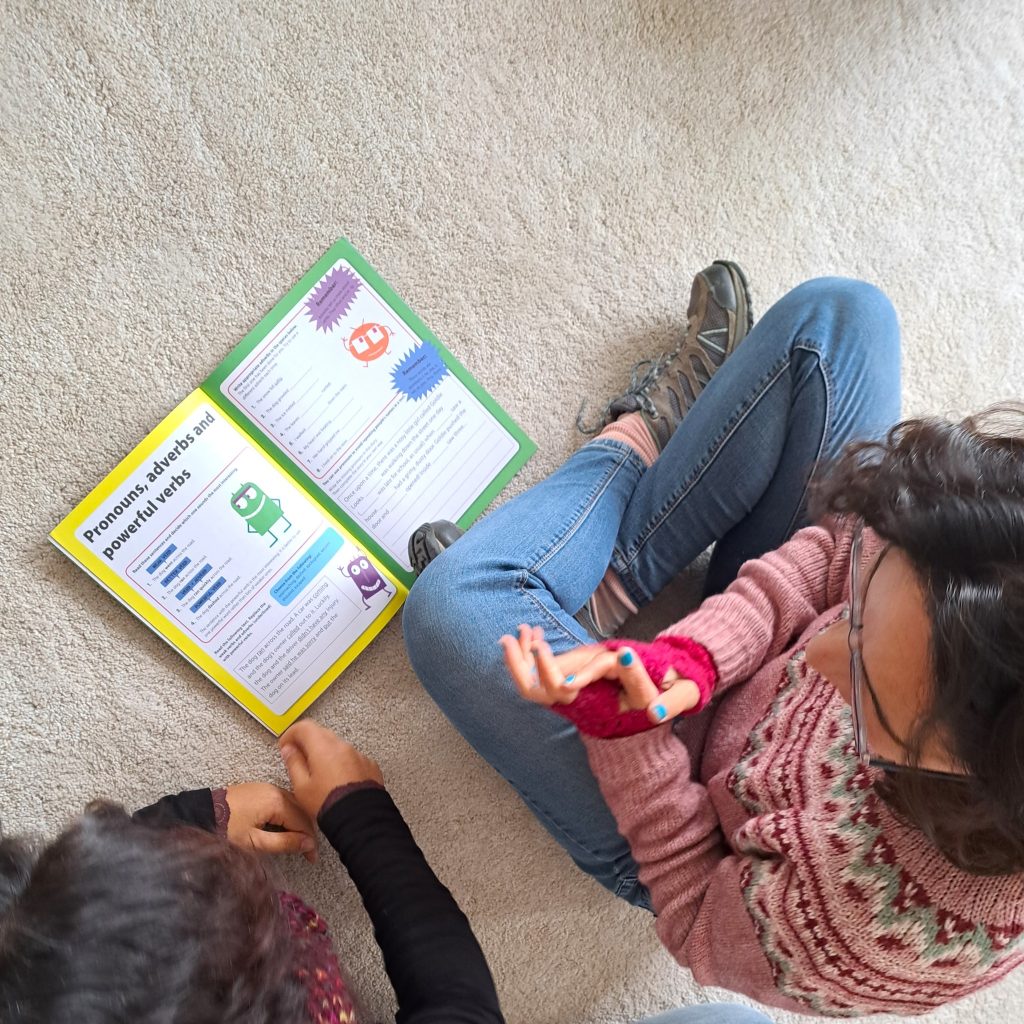
Reading, writing, and discussion activities are designed to build confidence and competence in both languages.
Our bilingual approach goes beyond language—it fosters cross-cultural understanding and global awareness.
For the 2026–27 school year, we will have two groups: Youngers 1 (grades 1 and 2) and Youngers 2 (grades 3 through 4).
Each group will have a maximum of 15 students and will be supported by a teacher and an assistant teacher.
For our Youngers (grades 1 through 4), learning happens through active play, exploration, and movement, using outdoor space whenever possible.
With a rich environment and supportive adults, children master essential skills in a meaningful way. We focus on relational skills, language development (Portuguese and English), and mathematical reasoning, practicing these through all Full Circle Learning (FCL) projects. (See below.)
Science and social studies are explored through group FCLs, where students choose topics under teacher guidance. These projects last 2-4 weeks and develop language, math, and artistic skills.
Each student also works on individual FCLs for Portuguese, English, and math, promoting independence. Mini lessons introduce core concepts, followed by opportunities for real-life application and creative expression.
Arts, health, and wellness are woven throughout the week, with some activities for the whole school and others in smaller groups.
With a focus on hands-on, play-based learning, Youngers gradually become more independent learners, building from the concrete to the abstract.
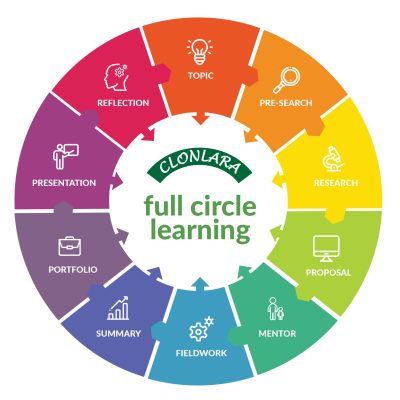
Clonlara’s Full Circle Learning (FCL) empowers students to explore topics that genuinely spark their curiosity, transforming interests into a purposeful learning plan.
FCL encourages each learner to take ownership of and personalize their education. This process nurtures the core competencies we aim to develop in every Clonlara student: collaboration, communication, content, critical thinking, creativity, and confidence (the 6Cs).
Using this approach, we support our students’ growth not only in what they know, but also in how they think, create, and connect with others.
The school day runs from 9am to 4pm.
No. The school does not provide transportation. Families are responsible for arranging their child’s travel to and from school.
There is no meal service. Students bring their own meals from home. The school provides facilities to eat and store food, including microwaves and electric ovens to heat meals, a refrigerator for storage, and utensils. Parents are responsible for providing water, healthy snacks, and a balanced lunch. Any dietary restrictions should be communicated to the campus staff.
We see technology as a tool that can support learning in a developmentally appropriate way. Teachers will guide students in engaging with digital tools to research, collaborate, and create, always within the framework of responsible and educational use.
Students cannot use mobile phones during class. Phones may be used only when formally authorized by teachers in the context of educational activities.
Families of students at Clonlara School Idanha can participate in activities, field trips, and excursions. They also have opportunities to support the day-to-day life of the school.
Contact Us:
Associação Clonlara Portugal
Centro Empresarial de Zona Industrial
6060-182 Idanha-a-Nova
+351 964 191 454